Rooftop Cargo Box vs Roof Bag vs Hitch Carrier
- Type
- Comparison
- Read
- 8 min
- Updated
- November 18, 2026
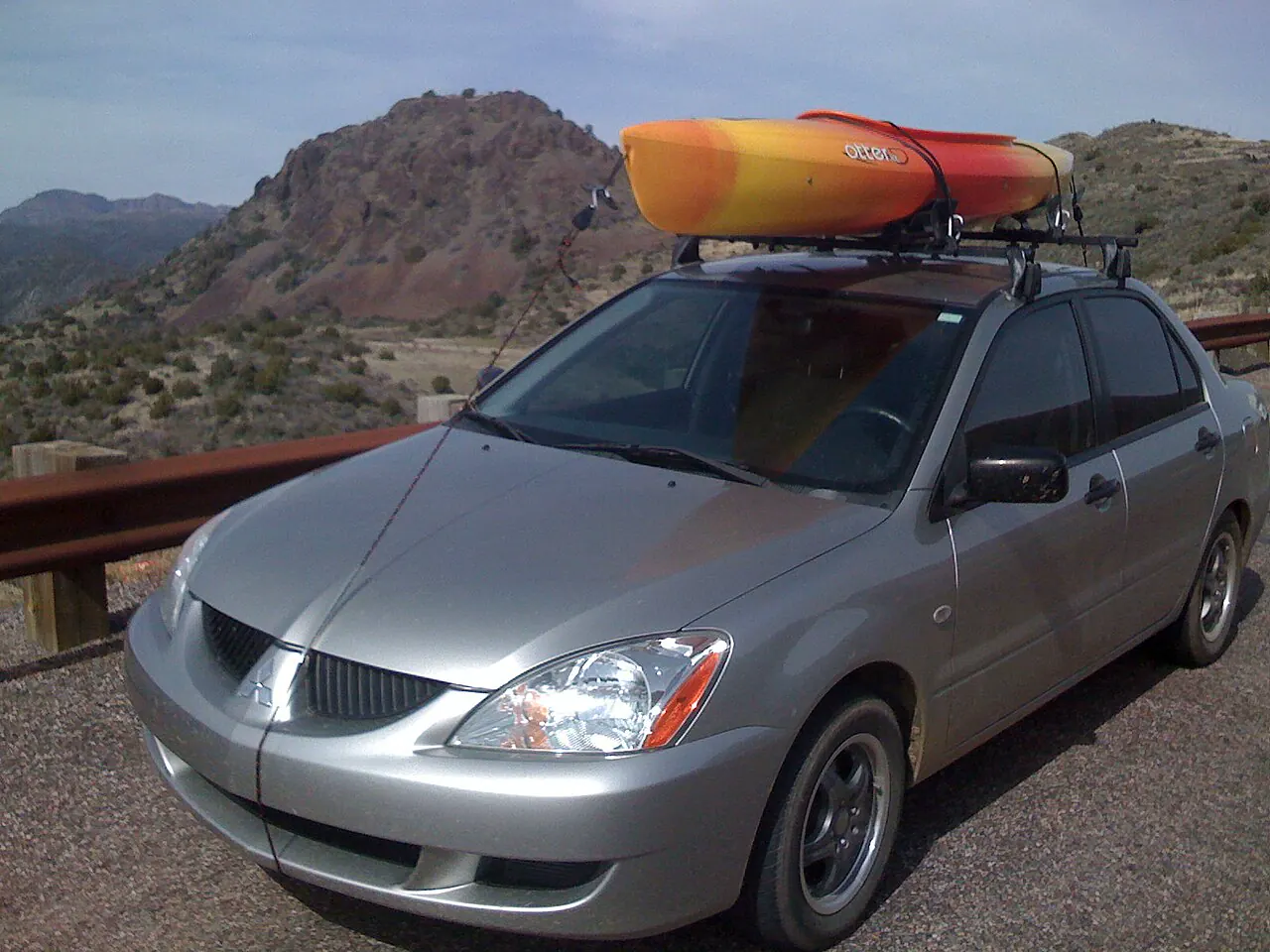
Choose a hard roof box if you travel often and have crossbars, a soft roof bag for occasional trips and easy storage, and a hitch carrier if your car has a receiver and you want less drag and easier loading. Check the roof and hitch weight limits first.
Written for: Families and road-trippers who have run out of trunk space
What your car allows
The right carrier depends first on what the car has. Look at the roof and the rear bumper before you look at products.
- Bare roof: no rails at all. A crossbar system has to clamp into the door frames, or you use a roof bag made for bare roofs with straps that pass through the cabin.
- Side rails: rails that run front to back. You still need crossbars that run side to side before a box can be mounted.
- Crossbars: the bars a box or basket clamps to. Check the bar shape and the spacing between the bars against the box’s mounting range.
- Hitch receiver: a square tube under the rear bumper. Its opening size and its tongue weight rating decide which hitch carriers fit.
The three options compared
| Hard roof box | Soft roof bag | Hitch cargo carrier | |
|---|---|---|---|
| Needs from the car | Crossbars | Crossbars, side rails or a bare roof, depending on the bag | Hitch receiver of the right size |
| Weather protection | Rigid shell with a sealed lid | Coated fabric; zippers and seams are the weak points | Open tray unless you add a bag or enclosed box |
| Security | Usually has a built-in lock | Fabric can be cut; little theft protection | Varies; many trays have none |
| Loading height | Overhead; hard on a tall SUV | Overhead | Waist level |
| Drag | High, though shaped to reduce it | High, and shape changes with the load | Low, since it sits behind the car |
| Storage when not in use | Bulky; needs wall or ceiling space | Folds into a small bag | Flat but heavy; some fold up |
| Watch out for | Hatch clearance, garage height | Strap routing, paint scuffing, loose strap ends | Blocked lights and plate, hot exhaust, rear sensors |
Weight limits come first
Every roof has a load limit, stated in the owner’s manual for the car while moving. The crossbars have their own limit, and so does the box. The lowest of the three is your limit. The weight of the bars and the empty box counts against it, so what remains for cargo is less than the headline number.
A hitch carrier is limited by the hitch’s tongue weight rating, and the carrier’s own weight counts there too. Everything, on the roof or the hitch, also counts toward the vehicle’s total. Owner’s manuals point to the label on the driver’s door frame, which lists the gross vehicle and axle weight ratings, and warn that exceeding them can cause a crash or damage the vehicle.
A fully loaded car may also need a different tire pressure. NHTSA points drivers to the Tire and Loading Information label on the driver’s door edge or post, and to the owner’s manual, for the correct figure. Set it with the tires cold before you leave.
The fuel cost of carrying cargo outside
Cargo on the roof adds wind resistance. The US Department of Energy’s fueleconomy.gov says a large, blunt rooftop cargo box can reduce fuel economy by around 2% to 8% in city driving, 6% to 17% on the highway and 10% to 25% at Interstate speeds of 65 to 75 mph. It puts rear-mount cargo boxes or trays at 1% or 2% in city driving and 1% to 5% on the highway.
Two conclusions follow. A hitch carrier costs less fuel on a long highway trip. And whichever carrier you use, take it off when the trip is over, so you are not paying the fuel penalty on every commute.
Fit checks before you buy
- Look up the roof load limit Find it in the owner’s manual, then subtract the weight of the crossbars and the empty box or bag.
- Check crossbar spacing Compare the distance between your bars with the box’s mounting range. Fixed factory bars cannot be moved.
- Check hatch clearance Open the rear hatch fully and note how far forward its top edge swings. A long box mounted too far back will be hit by the hatch or the rear antenna.
- Add up the total height Car height plus bars plus box. Compare with your garage door and any parking structures you use.
- For a roof bag, plan the straps On a bare roof the straps pass through the door openings. Check that they will not sit across side curtain airbags, and expect some wind noise and a path for rain along the strap.
- For a hitch carrier, check the rear view It must not hide the tail lights or license plate. Keep cargo away from the exhaust outlet, and expect parking sensors and a hands-free tailgate to behave differently.
Questions people ask
Can I use a roof bag without a roof rack?
Some bags are made for bare roofs and strap through the door openings. Use a protective mat under the bag, keep straps clear of side curtain airbags, and stay within the roof load limit.
How much weight can I put on my roof?
Only your owner’s manual can say. Use the lowest of three limits: the roof, the crossbars and the box. The bars and the empty box count toward it.
Does a roof box hurt gas mileage?
Yes. Fueleconomy.gov estimates a large, blunt rooftop box reduces fuel economy by around 6% to 17% on the highway and 10% to 25% at 65 to 75 mph. Remove it between trips.
Is a hitch carrier better than a roof box?
It is easier to load and causes less drag, but it needs a hitch receiver, sits in the weather unless enclosed, and can block lights, the plate and rear sensors.
Sources
This guide is research-based: it draws on manuals, published specifications and safety guidance, not on hands-on testing.As an Amazon Associate we earn from qualifying purchases. Links to Amazon are paid links; they cost you nothing extra. Affiliate disclosure