Thermoelectric Cooler vs Compressor Fridge for Road Trips
- Type
- Comparison
- Read
- 7 min
- Updated
- November 18, 2026
A thermoelectric cooler only cools to a set amount below the air around it, so it suits drinks and snacks on a day drive. A compressor fridge holds a set temperature like a home refrigerator and is the type to choose for meat, dairy and multi-day trips.
Written for: Road-trippers and car campers deciding between a plug-in cooler and a 12 V fridge
Two different machines
Both plug into the car’s 12 V socket, and listings often show them side by side. They work in different ways, and that decides what food each one can safely carry.
A thermoelectric cooler moves heat with a solid-state module and a fan. It has no refrigerant and few moving parts. Its cooling is relative: the specification gives a number of degrees below the surrounding air, not a temperature it will reach. In a hot cabin, the inside is still warm.
A compressor fridge works like a kitchen refrigerator. A compressor circulates refrigerant, and a thermostat cycles it on and off to hold the temperature you set. Many can be set low enough to freeze.
The food safety line
The USDA describes the range between 40 °F and 140 °F as the “Danger Zone”, where bacteria grow fastest. Its guidance is to never leave food out of refrigeration for more than 2 hours, or more than 1 hour when the temperature is above 90 °F.
This is the practical test for a cooler. If it cannot keep the inside at 40 °F or below in the conditions you expect, it is not a refrigerator for meat, dairy, eggs or leftovers. A parked car heats up quickly in the sun, as National Weather Service demonstrations show, which is exactly when a relative cooler falls behind.
Side by side
| Thermoelectric cooler | Compressor fridge | Passive ice chest | |
|---|---|---|---|
| How cold | A fixed amount below the surrounding air | Holds a set temperature; many can freeze | Near ice temperature while ice lasts |
| Hot car performance | Drops off as the cabin warms | Keeps its setting but runs longer | Ice melts faster |
| Power use | Draws current continuously while on | Cycles on and off once cold | None |
| Battery protection | Often none | Usually an adjustable low-voltage cutoff | Not needed |
| Weight and noise | Light; constant fan hum | Heavier; compressor hum in cycles | Light when empty; silent |
| Best for | Drinks, fruit, snacks on a day drive | Raw meat, dairy, medicines that need cold, multi-day trips | Weekend trips with ice available |
Power: the socket and the battery
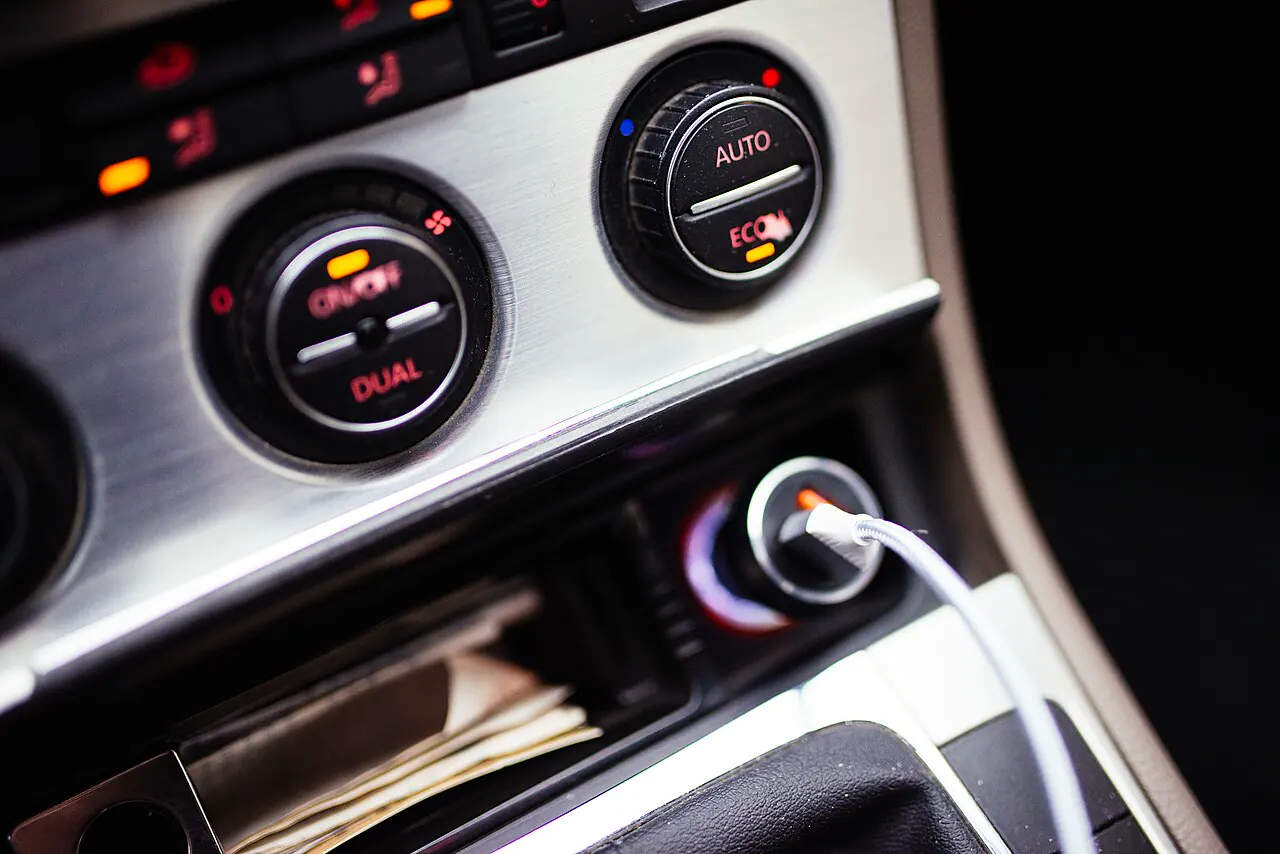
Check two things in your owner’s manual. The first is the socket’s limit. One current manual, for example, allows accessories of no more than 120 W (12 V, 10 A). Compare that with the cooler’s rated draw on its label.
The second is whether the socket stays live with the ignition off. Some do, and a cooler left running overnight can flatten the starter battery. The same manual warns against using the socket for long periods with the engine off or idling. A compressor fridge with a low-voltage cutoff shuts itself off before the battery gets too low to start the car. Set it to the most protective level when it runs from the starter battery.
- For overnight stops, look for a model with an AC adapter so it can run from a wall outlet at a motel or campsite.
- For camping without hookups, a separate portable power station keeps the fridge running without touching the starter battery.
- Pre-chill the unit and the food at home. Either type holds cold far more easily than it creates it.
Space and ventilation
Both types dump heat through vents. Blocked vents make them run hot and cool poorly, so the manual’s clearance figure matters as much as the outside dimensions. Before you buy, check the outside size against your cargo floor, the height with the lid open under the cargo cover or hatch, and the cord length from the nearest socket.
Before you buy
0 of 8 packedQuestions people ask
Can a thermoelectric cooler keep meat safe?
Only if it holds 40 °F or below, and in a warm car it often cannot, because it cools relative to the surrounding air. For raw meat and dairy, use a compressor fridge or an ice chest with plenty of ice, and check with a thermometer.
Will a 12 V cooler drain my car battery?
It can if the socket stays live with the engine off. Unplug it when parked, or use a compressor fridge with low-voltage protection or a separate power station.
Do compressor fridges work when the car is parked on a slope?
Makers publish a maximum tilt angle for operation. Check the manual if you camp on uneven ground.
Is an ordinary ice chest good enough?
For a weekend with ice available, often yes. It needs no power. Keep raw meat sealed and at the bottom, and keep a thermometer inside.
Sources
This guide is research-based: it draws on manuals, published specifications and safety guidance, not on hands-on testing.As an Amazon Associate we earn from qualifying purchases. Links to Amazon are paid links; they cost you nothing extra. Affiliate disclosure