How to Choose a Tire Inflator for Your Car
- Type
- Buying guide
- Read
- 7 min
- Updated
- November 17, 2026
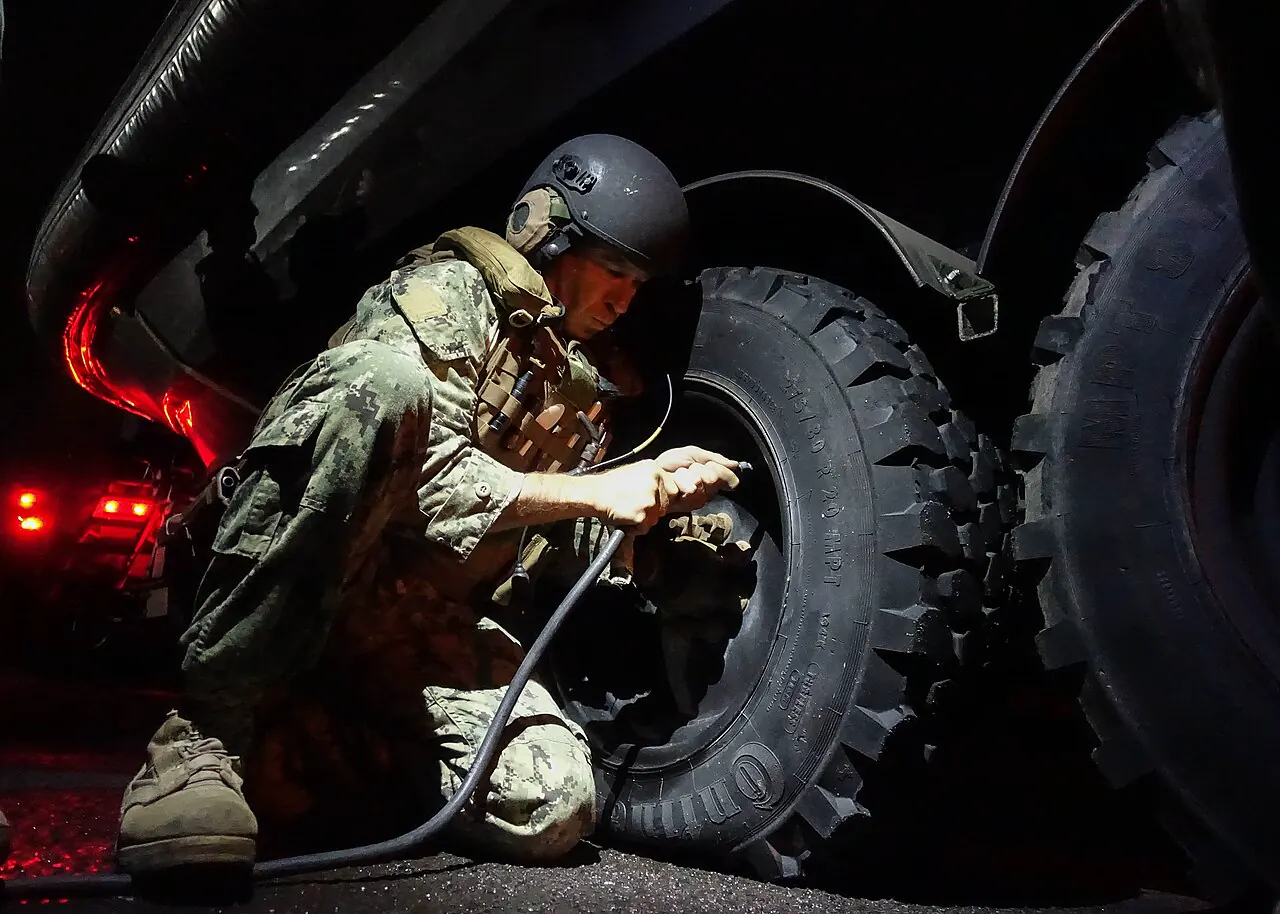
For most cars, a 12 V inflator with an auto-shutoff pressure setting is the simplest choice. Pick a cordless one if you want to use it away from the car, and check the duty cycle if you have large SUV or truck tires.
Written for: Car owners who want to top up tires at home or fix a slow leak at the roadside
What a portable inflator is for
A portable inflator is a small air compressor. Its main job is topping up tires that have lost a few PSI, which all tires do over time and faster in cold weather. It can also get a slow-leaking tire back up to pressure so you can drive to a repair shop.
It is not a shop compressor. It fills slowly, it heats up, and most models need rest breaks. Keep that in mind when you compare specs.
Start with your tire pressure
Your target pressure is on the placard on the driver’s door jamb (sometimes the glove box or fuel door), and in the owner’s manual. Do not use the number on the tire sidewall. That is the maximum the tire can hold, not what your car needs.
Most passenger cars run somewhere around 30 to 40 PSI. Nearly every inflator reaches that easily. A compact temporary spare often needs a higher pressure, typically around 60 PSI, so check that your inflator goes high enough if you want to fill the spare too.
Pick a power source
The power source decides where you can use the inflator and how long it can run. This table matches each type to the situations it suits.
| Power source | Best for | Limits |
|---|---|---|
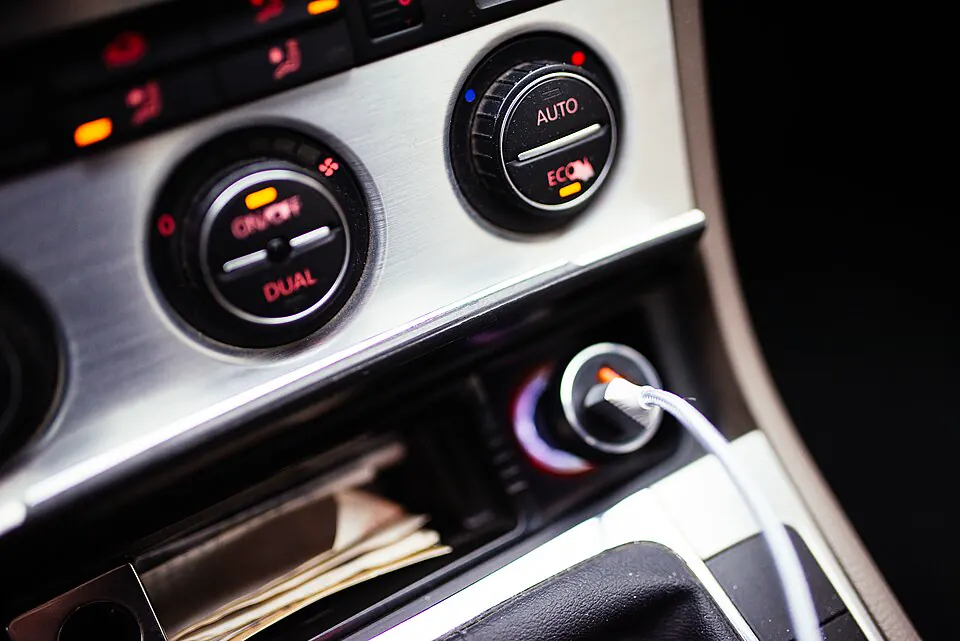
| 12 V socket plug | Sedans, small SUVs, roadside top-ups with the engine running | Socket fuse (usually 10-15 A) caps the motor size; cord must reach all four tires |
| 12 V battery clamps | Larger SUVs, pickups, frequent use | Hood must open; heavier unit; clamp the correct terminals |
| Built-in rechargeable battery | Quick checks in a garage or parking lot, bikes and sports balls | Runtime per charge is limited; battery must be kept charged |
| 120 V wall outlet (or AC/DC combo) | Home garage use | Needs an outlet; AC-only units are useless at the roadside |
Features that matter
- Auto-shutoff: you set the target PSI and the pump stops there. This prevents overfilling while you crouch by the wheel.
- Readable gauge: a backlit digital display helps at night. Units can differ slightly from a separate gauge, so confirm with one you trust.
- Valve connector: a screw-on chuck seals well but loses a little air as you unscrew it; a lever chuck is quicker. Both fit the standard Schrader valve on car tires.
- Duty cycle: the manual states how long the pump can run before it needs to cool, for example a set number of minutes on and off.
- Light and accessories: a work light helps at night; needle and cone adapters are for balls and inflatables.
Match it to your car
Small and midsize cars do well with almost any 12 V inflator. Large SUVs and light trucks have bigger tires, which take longer to fill. For those, look at airflow figures and the duty cycle, or choose a battery-clamp model. If you tow or carry heavy loads, check the placard for the loaded pressure, which can be higher.
What an inflator cannot fix
Check pressure when tires are cold, before driving or after the car has sat for a few hours. Warm tires read higher, so do not let air out of them after a drive.
Questions people ask
Can I use my car’s 12 V socket for any inflator?
Most compact inflators are designed for it. Check that the inflator’s current draw is within your socket’s fuse rating, which is in the owner’s manual. Larger units use battery clamps instead.
Should I inflate to the number on the tire?
No. Use the pressure on the door-jamb placard or in the owner’s manual. The sidewall number is the maximum the tire can safely hold.
Does a cordless inflator have enough battery for four tires?
For small top-ups usually yes, but it depends on the battery and how much air each tire needs. Check the stated runtime and keep it charged.
Can an inflator fill a completely flat tire?
It can, slowly, if the tire is undamaged and still seated on the rim. A tire that went flat while driving should be inspected before you reinflate it.
Sources
This guide is research-based: it draws on manuals, published specifications and safety guidance, not on hands-on testing. If we link to a retailer, we may earn a commission at no cost to you. Affiliate disclosure