How to Use a Jump Starter Safely, Step by Step
- Type
- How-to
- Read
- 6 min
- Updated
- November 17, 2026
Turn everything off, connect red to the positive terminal and black to a ground point the manual names, switch the pack on, then crank for a few seconds at most. Disconnect in reverse order once the engine runs.
Written for: Drivers using a portable jump starter for the first time
Before you start
Read two manuals: your jump starter’s and your car’s. The car manual shows where to connect. Some cars have remote jump terminals under the hood because the battery is in the trunk or under a seat.
The steps
- Park and switch off Park safely, set the parking brake, put the car in Park or Neutral, and turn off the ignition, lights, climate control and accessories.
- Check the pack Make sure the jump starter is charged and switched off, and that the clamps are not touching each other.
- Find the terminals Locate the positive (+, often red cover) terminal and the ground point your manual names, usually unpainted metal on the engine block or a marked ground stud.
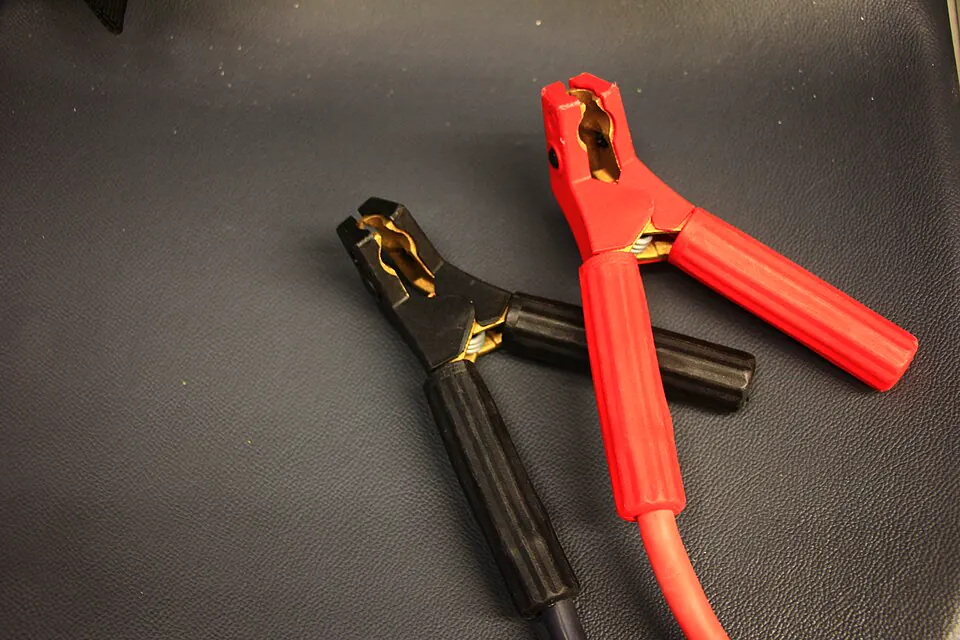
- Connect red to positive Attach the red clamp firmly to the positive terminal or jump post.
- Connect black to ground Attach the black clamp to the ground point, away from the battery and moving parts. Some packs allow the negative terminal; follow your pack’s manual.
- Switch the pack on Turn it on and wait for the ready light. If it shows a polarity or fault warning, turn it off and recheck the clamps.
- Start the car Crank for no longer than the manual allows, often a few seconds. If it does not start, wait as long as the manual says before trying again.
- Disconnect in reverse Once the engine runs, switch the pack off, remove the black clamp, then the red clamp. Keep the clamps apart.
- Let the car run Drive or idle for a while so the alternator can recharge the battery, then recharge the jump starter.
If the pack does not detect the battery
A battery that is very flat may not show enough voltage for the pack to switch on. Many packs have a boost or manual override for this case. It disables some protection, so double-check that red is on positive and black on ground before you press it, and follow the manual exactly.
If the car still will not start
- Clicking but no crank: check that the clamps bite clean metal, and that the battery terminals are not loose or corroded.
- Cranks but does not fire: the battery may not be the problem. Fuel, ignition or a security system can be the cause.
- Nothing at all: the pack may be flat or too small for the engine, especially in cold weather.
- After a few attempts, stop. Repeated long cranking can overheat the starter and the pack.
Questions people ask
Why connect the black clamp to metal instead of the negative terminal?
Car makers often specify a ground point away from the battery so any spark happens away from battery gases. Some jump starter manuals allow the negative terminal; follow both manuals.
How long should I crank?
Only as long as your jump starter’s manual allows, often a few seconds, with a rest between attempts.
Can I leave the pack connected while I drive?
No. Disconnect it once the engine runs, then close the hood.
What if I connect the clamps the wrong way?
Packs with reverse-polarity protection will not turn on and should show a warning. Switch off, correct the clamps and try again. Without protection, reversed clamps can damage electronics.
Sources
This guide is research-based: it draws on manuals, published specifications and safety guidance, not on hands-on testing. If we link to a retailer, we may earn a commission at no cost to you. Affiliate disclosure